
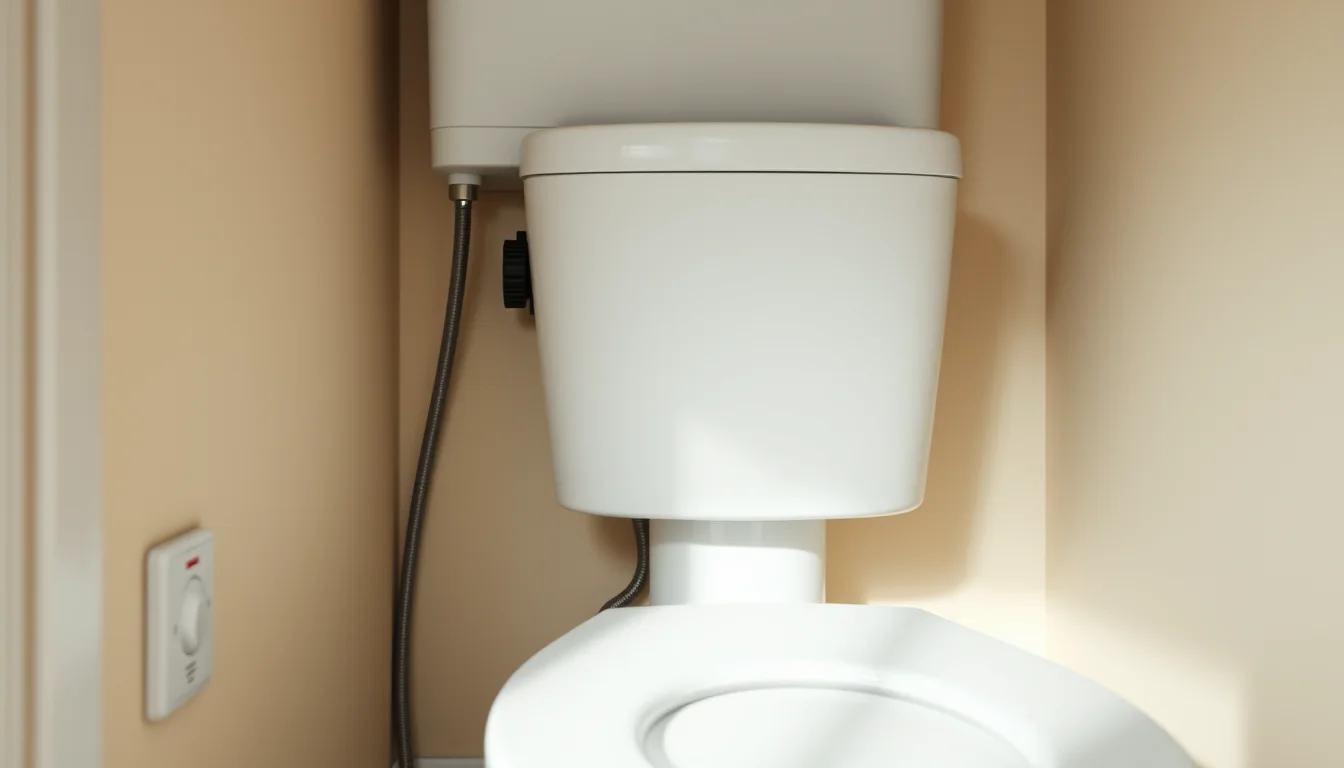
Quick answer
Most repeat Saniflo blockages come from wipes, sanitary items or cotton buds. A stuck float switch or a worn cutter blade can also cause trouble. First isolate the power at the unit's own switch. Then stick to a visual check, since the cutter chamber is not safe to clear yourself.
Why people fit macerator toilets
Some rooms sit too low for a normal toilet to work. Others sit too far from the main soil stack. Basement rooms, loft en-suites and rear extensions are common cases. A macerator toilet grinds waste into a slurry, and a small pump then pushes it through narrow pipe to the existing drain.
That lets you add a bathroom without digging up floors. Saniflo units, such as the Sanicompact, work on the same idea. A cutter reduces the waste, and a pump moves it on. All of them need a dedicated electrical supply.
Symptom guide
| Symptom | Likely cause |
|---|---|
| Unit runs on and on after flushing | Blocked impeller, worn cutter blade or float switch stuck on |
| Loud grinding or rattling | A wipe or other object in the macerating chamber, or a damaged blade |
| Water leaking from the base | A worn seal or gasket, or a cracked casing |
| No response when flushed | No power reaching the motor, so check the fused spur, or a motor fault |
| Persistent foul smell | A partial blockage holding waste in the chamber, or a vent problem |
| Unit cuts out mid-cycle and restarts later | Overload protection tripping, usually from a sustained blockage |
If you notice any of these, switch off the power at the isolator near the unit. Stop using that toilet until you know the cause, to keep a small fault small.
What not to flush
A macerator handles human waste and a normal amount of toilet paper, and nothing else belongs in it. These items cause the most repeat blockages, so bin them instead.
- Wet wipes, baby wipes and so-called flushable wipes
- Sanitary towels, tampons and nappies
- Cotton buds, cotton pads and dental floss
- Cooking fat, oil and grease
- Food scraps, coffee grounds and tea leaves
Small amounts add up over time. That is the biggest reason a Saniflo blocks again and again, since the build-up grows slowly.
Checks you can try safely
Isolate the power first. Then work through these checks, but stop if anything looks unsafe.
- Gently see whether the float switch moves freely, since a stuck float stops the unit from switching off
- Look through the access panel, if the unit has one, for an obvious obstruction such as a wipe
- Check whether the fused spur has tripped or blown
Do not reach into the chamber or try to remove an obstruction yourself. The cutter blade can still cause injury with the power off. Leave extraction to a technician. Do not keep resetting a fuse that blows again and again, since that points to a fault.
When to stop and ask for help
- The float switch will not move after a gentle check
- You hear grinding or metal on metal, or the pump shakes
- Water leaks from the base, or a seal looks cracked
- The unit shows no sign of life, even though the power checks out
- A bad smell lasts after you check for blockages
- Other fixtures drain slowly too, which suggests the problem lies further down the pipe
Opening the macerator chamber beyond a visual check can damage seals. It can also expose you to waste water, and it may affect cover from the maker. Installation and electrical work must follow Building Regulations. Use a qualified installer for anything beyond a basic check.
Our Saniflo and macerator repair page covers the work in more detail. No published price range exists for it. Ask for a written quote after the engineer has seen the unit.
When it becomes urgent
If your only toilet stops working, treat it as urgent, since you cannot manage without one. See the emergency drain services page for what to include in a request. A pan that will not clear at all also overlaps with the blocked toilet page.
Drain pages by town
A macerator can block in any town. For help in Maldon or Springfield, read blocked drain help in Maldon and blocked drain help in Springfield. In Braintree, drain unblocking in Braintree covers the options if the pipe beyond the unit is blocked.
- Blocked drains in Chelmsford
- Blocked drains in Braintree
- Emergency drain services in Brentwood
- Chelmsford area page
- All drainage services
Frequently asked questions
Why does my Saniflo keep running or making noise?
Continuous running is usually a stuck float switch or a blocked impeller. Grinding or rattling points to an object in the cutter chamber or a worn blade. Isolate the power before you check either, since both involve moving parts.
How much does a Saniflo repair cost?
This site has no sourced price range to quote. The cost depends on which part has failed. A stuck float is a smaller job than a new motor, so ask for a written quote.
Can a Saniflo be repaired, or must it be replaced?
A technician can often fix a stuck float, a worn cutter or a failed seal with the right part. Replacement tends to arise when the motor has failed on an older unit. A technician can confirm this on inspection, and a quote shows the choice.
Why does my Saniflo smell bad?
A lasting smell usually has one of two causes. A partial blockage may hold waste in the chamber, or the vent may have a fault. Isolate the power and get the unit checked, since a smell rarely clears on its own.
Is my macerator blocked or broken?
If it still runs but struggles, a blockage from a wipe or similar item is more likely. However, if it is completely dead with power confirmed, a motor or electrical fault is more likely.